Bachelor of Siddha Medicine & Surgery (BSMS) Admission 2026
Nishit Kumar is a senior EdTech industry leader with over a decade of experience in building and scaling education platforms, shaping their product, content, and growth strategy. At…
Latest update: Bachelor of Siddha Medicine & Surgery 2026 admissions & dates updated. Read more ›
Planning your medical career in India and interested in traditional systems? The Bachelor of Siddha Medicine & Surgery (BSMS) Admission 2026 offers a unique pathway into healthcare. This comprehensive guide provides all the essential information for prospective students and parents, covering eligibility, application procedures, fees, career prospects, and more.
What is Bachelor of Siddha Medicine & Surgery (BSMS)?
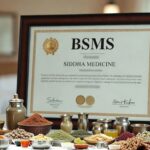
The Bachelor of Siddha Medicine & Surgery (BSMS) is an undergraduate degree program focused on the ancient Siddha system of medicine, originating in South India. It is a 5.5-year course, including a one-year compulsory rotating internship, designed to train students in both traditional Siddha principles and modern medical sciences, enabling them to practice as qualified Siddha physicians.
What is the eligibility for Bachelor of Siddha Medicine & Surgery Admission 2026?
To be eligible for BSMS Admission 2026, candidates must have successfully completed their 10+2 (or equivalent) examination with Physics, Chemistry, and Biology (PCB) as core subjects, and must also qualify in the NEET-UG examination. A minimum aggregate percentage in PCB, typically ranging from 45% to 50% for general category students and slightly lower for reserved categories, is usually required.
Detailed Eligibility Criteria for BSMS 2026:
- Educational Qualification: Candidates must have passed the 10+2 (Intermediate) examination or its equivalent from a recognized board.
- Subjects: Physics, Chemistry, and Biology (Botany & Zoology) must be compulsory subjects in the 10+2 examination. English is also mandatory.
- Minimum Marks: Generally, a minimum of 50% aggregate marks in PCB for General category candidates, 45% for PwD candidates, and 40% for SC/ST/OBC candidates is required.
- Age Limit: The candidate must be at least 17 years old as of December 31, 2026. There is usually no upper age limit for NEET-UG, which applies to BSMS as well.
- NEET-UG Qualification: Appearing for and qualifying in the National Eligibility cum Entrance Test (NEET-UG) is mandatory for BSMS admission across India. Candidates must meet the minimum qualifying percentile set by NTA.
- Nationality: Indian nationals, Non-Resident Indians (NRIs), Overseas Citizens of India (OCIs), Persons of Indian Origin (PIOs), and foreign nationals are eligible.
People Also Read
Is NEET mandatory for BSMS Admission 2026?
Yes, NEET-UG is absolutely mandatory for BSMS Admission 2026. Admission to all AYUSH (Ayurveda, Yoga & Naturopathy, Unani, Siddha, and Homoeopathy) courses, including BSMS, is conducted through the NEET-UG scores, followed by centralized counseling processes at the national and state levels.
What is the application process for BSMS Admission 2026?
The application process for BSMS Admission 2026 primarily involves two stages: appearing for NEET-UG and then participating in the AYUSH Admissions Central Counseling Committee (AACCC) or state-level counseling. Students must first register for NEET-UG, then apply for counseling based on their NEET scores.
Step-by-Step Application Process:
- NEET-UG Application: Register and apply for the NEET-UG examination through the official NTA website. Fill out the application form accurately, upload required documents, and pay the application fee.
- Appear for NEET-UG: Take the NEET-UG examination on the scheduled date.
- NEET-UG Result: Check your NEET-UG result and download your scorecard.
- Counseling Registration (AACCC/State): After NEET results, register for the AYUSH Admissions Central Counseling Committee (AACCC) for All India Quota seats (15%) or respective state counseling authorities for State Quota seats (85%).
- Choice Filling & Locking: During counseling, candidates must fill in their preferred colleges and courses (BSMS) in order of priority.
- Seat Allotment: Based on NEET rank, choices filled, and seat availability, seats will be allotted.
- Document Verification & Admission: Report to the allotted college with original documents for verification and complete the admission formalities, including fee payment.
Key Dates for BSMS Admission 2026 (Tentative):
Please note that these dates are approximate and subject to change. Refer to official NTA and AACCC notifications for confirmed schedules.
| Event | Tentative Dates (2026) |
|---|---|
| NEET-UG Application Start | February – March 2026 |
| NEET-UG Application End | March – April 2026 |
| NEET-UG Exam Date | May 2026 |
| NEET-UG Result Declaration | June 2026 |
| AACCC/State Counseling Registration | July – August 2026 |
| Counseling Rounds & Allotment | August – October 2026 |
| Admission Process Completion | October – November 2026 |
How much does Bachelor of Siddha Medicine & Surgery cost? (BSMS Fees 2026)
The cost of a BSMS degree varies significantly between government and private institutions. Government colleges generally have much lower fees, while private colleges can be considerably more expensive. The annual tuition fees for BSMS can range from INR 10,000 to INR 5,00,000 or more, depending on the institution.
BSMS Fee Structure 2026 (Annual Range):
| Type of Institution | Annual Tuition Fee Range (INR) | Additional Costs (Approx. Annual, INR) |
|---|---|---|
| Government Colleges | INR 10,000 – INR 1,00,000 | INR 10,000 – INR 50,000 (Hostel, Exam, Misc.) |
| Private Colleges | INR 1,50,000 – INR 5,00,000+ | INR 50,000 – INR 1,50,000+ (Hostel, Exam, Lab, Misc.) |
These figures are indicative and may not include hostel fees, mess charges, examination fees, library fees, or other miscellaneous charges, which can add a substantial amount to the overall cost.
Is Bachelor of Siddha Medicine & Surgery worth it for jobs? (Career Scope & Salary)
Yes, a Bachelor of Siddha Medicine & Surgery degree offers a promising career path, especially with the growing global interest in traditional and holistic healthcare. Graduates can find employment in government and private hospitals, establish their own clinics, work in research, or pursue academic roles. The career scope is expanding with government initiatives promoting AYUSH systems.
Career Opportunities and Salary Ranges for BSMS Graduates:
After completing BSMS, graduates can explore various roles. Salaries can vary based on experience, location, and the type of employer.
| Job Role | Description | Average Starting Salary (Annual, INR) | Average Mid-Career Salary (Annual, INR) |
|---|---|---|---|
| Siddha Physician/Doctor | Diagnose and treat patients using Siddha principles, prescribe medicines, and recommend lifestyle changes. | INR 3,00,000 – INR 6,00,000 | INR 6,00,000 – INR 15,00,000+ |
| Medical Officer (AYUSH) | Work in government AYUSH hospitals, dispensaries, or health centers. | INR 4,00,000 – INR 7,00,000 | INR 7,00,000 – INR 18,00,000+ |
| Researcher | Conduct research on Siddha formulations, clinical trials, and drug development. | INR 3,50,000 – INR 6,50,000 | INR 6,00,000 – INR 12,00,000+ |
| Lecturer/Professor | Teach Siddha medicine in colleges and universities (requires postgraduate degree). | INR 4,00,000 – INR 8,00,000 | INR 8,00,000 – INR 20,00,000+ |
| Consultant/Private Practitioner | Establish own clinic or consult in private wellness centers. Earning potential varies widely. | INR 3,00,000 – INR 8,00,000 | INR 8,00,000 – INR 25,00,000+ |
What are the top colleges for BSMS in India?
Several reputable institutions across India offer the BSMS program, with a concentration in Tamil Nadu, where the Siddha system originated. These colleges are known for their academic rigor, clinical exposure, and research facilities.
Prominent BSMS Colleges:
- Government Siddha Medical College, Chennai, Tamil Nadu
- Government Siddha Medical College, Palayamkottai, Tamil Nadu
- Sri Sairam Siddha Medical College and Research Centre, Chennai, Tamil Nadu
- Velumailu Siddha Medical College, Sriperumbudur, Tamil Nadu
- Sivaraj Siddha Medical College, Salem, Tamil Nadu
- National Institute of Siddha (NIS), Chennai, Tamil Nadu (for PG courses, but affiliated with colleges)
BSMS vs. BAMS vs. BHMS: Which is better?
The choice between BSMS, BAMS (Bachelor of Ayurvedic Medicine & Surgery), and BHMS (Bachelor of Homoeopathic Medicine & Surgery) depends entirely on a student’s interest in a particular traditional medical system. All three are recognized AYUSH degrees, but they differ in their philosophical foundations, diagnostic methods, and treatment approaches.
Comparison of AYUSH Medical Courses:
| Feature | BSMS (Siddha) | BAMS (Ayurveda) | BHMS (Homoeopathy) |
|---|---|---|---|
| Origin | South India (Tamil Nadu) | Ancient India | Germany |
| Core Principle | Three Humours (Vatham, Pitham, Kapham), 96 Tattvas | Three Doshas (Vata, Pitta, Kapha) | “Like cures like” (Law of Similars) |
| Treatment | Herbal, mineral, animal products, Varmam therapy, Yoga, Pranayama | Herbal remedies, diet, lifestyle, Panchakarma | Highly diluted substances (potencies) |
| Focus | Holistic health, body-mind-soul balance, rejuvenation | Balancing Doshas, preventive and curative medicine | Stimulating body’s self-healing response |
| Geographic Prevalence | Primarily Tamil Nadu, Kerala, Sri Lanka | Pan-India, globally recognized | Pan-India, globally recognized |
| NEET Mandatory | Yes | Yes | Yes |
Each system has its strengths and patient base. Students should research the philosophy and practice of each to determine which aligns best with their interests.
What is the syllabus for BSMS?
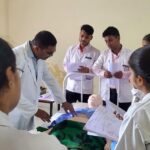
The BSMS syllabus is a comprehensive curriculum that integrates traditional Siddha medical knowledge with modern anatomy, physiology, pathology, and forensic medicine. It covers foundational Siddha texts, pharmacology, clinical subjects, and practical training.
Overview of BSMS Syllabus (Typical Subjects):
- First Professional Year: Siddha Maruthuva Adippadai Thathuvangal (Fundamentals of Siddha Medicine), Tamil Mozhiyum Ilakkiyamum (Tamil Language & Literature), Uyir Vedhiyal (Biochemistry), Udal Koorugal (Anatomy), Udal Thathuvam (Physiology), Noi Naadal (Pathology – Part I)
- Second Professional Year: Gunapadam (Mooligai – Materia Medica – Herbal), Gunapadam (Thathu & Jeeva – Materia Medica – Mineral & Animal), Noi Naadal (Pathology – Part II), Sattam Saarntha Maruthuvamum Nanju Noolum (Forensic Medicine & Toxicology), Sutruppura Suzhal Maruthuvam (Environmental Medicine)
- Third Professional Year: Noi Illa Thani Maruthuvam (Preventive Medicine), Aruvai Maruthuvam (Surgery), Maruthuvam (General Medicine), Pura Maruthuvam (External Therapies), Sirappu Maruthuvam (Special Medicine), Kuzhandai Maruthuvam (Pediatrics)
- Fourth Professional Year: Siddha Maruthuva Noi Naadal (Siddha Clinical Pathology), Research Methodology & Medical Statistics, Clinical Training in various departments.
- Compulsory Rotatory Internship: One year of practical training in various departments of a Siddha hospital.
Explore more on FindMyCollege
Related pages for Bachelor of Siddha Medicine & Surgery aspirants on findmycollege.com:
Frequently Asked Questions