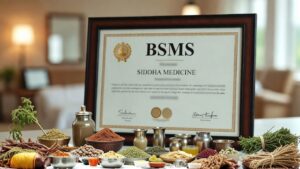
Bachelor of Siddha Medicine & Surgery (BSMS) Distance/Online 2026
Nishit Kumar is a senior EdTech industry leader with over a decade of experience in building and scaling education platforms, shaping their product, content, and growth strategy. At…
Latest update: Bachelor of Siddha Medicine & Surgery 2026 admissions & dates updated. Read more ›
For aspiring medical professionals in India, the Bachelor of Siddha Medicine & Surgery (BSMS) is a prestigious undergraduate degree focused on the ancient Siddha system of medicine. However, it is crucial to understand the landscape of distance and online learning for such a specialized medical program. This comprehensive guide addresses all aspects of pursuing BSMS through non-traditional modes in 2026.
Can I study Bachelor of Siddha Medicine & Surgery (BSMS) through Distance or Online Learning in India?
No, the Bachelor of Siddha Medicine & Surgery (BSMS) program cannot be pursued through distance or online learning modes in India. BSMS is a full-time, campus-based professional medical degree that requires extensive practical training, clinical rotations, and hands-on experience with patients, which are impossible to replicate in an online or distance format.
The regulatory bodies governing medical education in India, such as the National Commission for Indian System of Medicine (NCISM), mandate compulsory attendance, practical sessions, laboratory work, and clinical internships for all undergraduate medical courses, including Siddha. These requirements ensure that graduates possess the necessary clinical skills and ethical understanding to practice medicine safely and effectively.
Why is BSMS Not Offered in Distance or Online Mode?
The primary reason BSMS is not offered in distance or online mode stems from its inherent nature as a clinical medical degree. Key aspects that necessitate a full-time, on-campus presence include:
- Practical Training: Siddha medicine involves diagnosis through pulse reading, urine examination, and other physical assessments, along with preparing and administering herbal formulations, therapeutic procedures (e.g., Varmam therapy, Thokkanam), and patient counseling. These require direct supervision and hands-on practice.
- Clinical Rotations: Students must complete mandatory clinical rotations in affiliated hospitals, interacting with real patients under the guidance of experienced Siddha physicians. This exposure is vital for developing diagnostic and treatment skills.
- Laboratory Work: The curriculum includes extensive laboratory sessions for pharmacognosy, pharmacology, pathology, and Siddha drug preparation, which demand specialized equipment and facilities.
- Ethical and Professional Development: A campus environment fosters peer learning, interaction with faculty, and the development of professional ethics and communication skills essential for a medical practitioner.
- Regulatory Mandates: NCISM guidelines explicitly state that all BAMS, BSMS, BUMS, and BHMS courses must be full-time and residential, with no provision for distance or online education.
What are the Eligibility Criteria for a Full-Time BSMS Program in 2026?
To be eligible for a full-time Bachelor of Siddha Medicine & Surgery (BSMS) program in 2026, candidates must meet specific academic and age requirements. These criteria are uniformly applied across all recognized institutions in India.
- Educational Qualification: Candidates must have passed 10+2 (or equivalent) with Physics, Chemistry, and Biology (PCB) as compulsory subjects from a recognized board.
- Minimum Marks: A minimum aggregate of 50% marks in PCB is generally required for general category candidates. Reserved categories (SC/ST/OBC) usually have a relaxation, often requiring 40% or 45%.
- Entrance Exam: Admission to BSMS courses in India is primarily through the National Eligibility cum Entrance Test (NEET-UG). Candidates must qualify for NEET-UG and meet the cut-off scores specified by the counselling authorities.
- Age Limit: The candidate must be at least 17 years old as of December 31st of the admission year (i.e., December 31, 2026, for the 2026 academic session). There is no upper age limit for NEET-UG as per recent Supreme Court rulings.
- Domicile: Some state-run colleges may have domicile requirements for a certain percentage of their seats.
People Also Read

How Much Does a Full-Time BSMS Program Cost in India (2026)?
The cost of a full-time BSMS program varies significantly between government and private institutions. Government colleges typically have much lower fees due to subsidies, while private colleges charge higher fees to cover their operational costs and infrastructure.
BSMS Fee Structure (Annual, 2026 Estimates)
| Institution Type | Annual Tuition Fee Range (INR) | Other Charges (Hostel, Exam, etc.) | Total Annual Cost (Approx. INR) |
|---|---|---|---|
| Government Colleges | ₹10,000 – ₹50,000 | ₹5,000 – ₹20,000 | ₹15,000 – ₹70,000 |
| Private Colleges | ₹1,00,000 – ₹3,50,000 | ₹20,000 – ₹70,000 | ₹1,20,000 – ₹4,20,000 |
Note: These are estimated ranges for the 2026 academic year and can vary based on the specific college, state, and facilities offered. Hostel fees are often separate and can add ₹50,000 to ₹1,50,000 per year.
What is the Syllabus and Duration of the BSMS Course?
The Bachelor of Siddha Medicine & Surgery (BSMS) is a comprehensive 5.5-year undergraduate program, which includes 4.5 years of academic study and a mandatory 1-year rotatory internship. The syllabus is designed to provide a deep understanding of Siddha principles, modern medical sciences, and practical clinical skills.
Key Subjects Covered in BSMS
- Siddha Basic Principles: History of Siddha Medicine, Fundamental Principles (Muppini, Panchabootham), Siddha Physiology (Udal Thathuvam).
- Siddha Pathology & Diagnosis: Noi Naadal (Pathology), Noi Anugavidhi (Diagnostic Methods), Envagai Thervugal (Eight-fold Examination).
- Siddha Materia Medica & Pharmacology: Gunapadam (Drug Identification, Preparation, and Action), Siddha Pharmacognosy.
- Siddha Therapeutics: Maruthuvam (Treatment Principles), Siddha Clinical Medicine, Special Therapies (Varmam, Thokkanam, Yoga).
- Modern Medical Sciences: Anatomy, Physiology, Biochemistry, Pathology, Microbiology, Forensic Medicine, Community Medicine, Surgery, Obstetrics & Gynaecology (basic concepts relevant to Siddha practice).
- Research Methodology & Biostatistics.
What are the Career Prospects and Salary Expectations After BSMS?
A Bachelor of Siddha Medicine & Surgery (BSMS) degree opens up various career opportunities in healthcare, research, and education, primarily within the Siddha system but also in integrated healthcare settings. Graduates can work as practitioners, researchers, educators, or in pharmaceutical industries.
Common Career Paths and Estimated Annual Salaries (Entry to Mid-Level)
| Job Role | Description | Average Annual Salary Range (INR) |
|---|---|---|
| Siddha Physician/Consultant | Practicing in private clinics, government hospitals, or dispensaries. | ₹3,00,000 – ₹7,00,000 |
| Medical Officer (Government) | Working in state/central government AYUSH dispensaries/hospitals. | ₹4,50,000 – ₹8,00,000 |
| Lecturer/Professor | Teaching in Siddha medical colleges (requires postgraduate degree for higher positions). | ₹3,50,000 – ₹6,00,000 (entry-level) |
| Research Associate | Involved in research and development of Siddha drugs and therapies. | ₹3,00,000 – ₹5,50,000 |
| Drug Safety Officer/Pharmacovigilance | Ensuring safety and efficacy of Siddha formulations in pharmaceutical companies. | ₹3,00,000 – ₹6,00,000 |
| Health & Wellness Consultant | Providing holistic health advice in wellness centers or corporate settings. | ₹2,50,000 – ₹5,00,000 |
Salaries can increase significantly with experience, specialization (e.g., MD in Siddha), and establishing a successful private practice.
Is Pursuing a Full-Time BSMS Program Worth It for Jobs and Career Growth?
Yes, pursuing a full-time BSMS program is definitely worth it for those genuinely interested in the Siddha system of medicine and a career in holistic healthcare. The demand for AYUSH practitioners, including Siddha doctors, is steadily growing in India and globally, driven by an increasing preference for traditional and natural healing methods.
The government’s focus on promoting AYUSH systems, integration into public health, and dedicated research initiatives provide a strong foundation for career growth. Graduates can establish successful private practices, join government health services, contribute to research, or even explore international opportunities in countries recognizing traditional medicine.
Explore more on FindMyCollege
Related pages for Bachelor of Siddha Medicine & Surgery aspirants on findmycollege.com:
Frequently Asked Questions
Can I pursue a BSMS degree part-time?
No, the Bachelor of Siddha Medicine & Surgery (BSMS) is a full-time, intensive medical program. There are no provisions for part-time study due to the extensive practical, clinical, and attendance requirements mandated by regulatory bodies like NCISM.
Are there any bridge courses or diploma programs in Siddha that are online?
While the full BSMS degree is not online, there might be short-term certificate courses or introductory programs on Siddha principles offered online by various institutions or private academies. However, these do not confer a medical practitioner’s license and are primarily for general awareness or supplementary knowledge, not for professional practice.
Which entrance exam is required for BSMS admission in 2026?
Admission to the Bachelor of Siddha Medicine & Surgery (BSMS) program in 2026 will primarily be based on the scores obtained in the National Eligibility cum Entrance Test (NEET-UG). Candidates must qualify for NEET-UG and participate in the subsequent counseling process.
What is the typical duration of the BSMS internship?
The BSMS program includes a mandatory one-year (12 months) rotatory internship after the 4.5 years of academic study. This internship provides hands-on clinical experience in various departments under supervision.
Can BSMS graduates practice modern medicine?
BSMS graduates are primarily trained and licensed to practice Siddha medicine. While their curriculum includes foundational modern medical subjects, they are not authorized to practice allopathic (modern) medicine independently. However, they can work in integrated healthcare settings where Siddha and modern medicine are practiced collaboratively.
What are the higher education options after BSMS?
After completing BSMS, graduates can pursue postgraduate degrees such as MD (Siddha) in various specialties like Gunapadam (Pharmacology), Noi Naadal (Pathology), Sirappu Maruthuvam (Special Medicine), etc. They can also pursue Ph.D. programs for research careers.
Are there scholarships available for BSMS students?
Yes, various scholarships are available for deserving BSMS students. These include government scholarships (state and central), scholarships offered by AYUSH ministries, and some private institutions or trusts. Eligibility often depends on academic merit, financial need, and category (e.g., SC/ST/OBC).
What are the top states for BSMS education in India?
Tamil Nadu is the primary hub for Siddha education in India, as it is the origin place of the Siddha system. States like Kerala and Puducherry also have recognized institutions offering BSMS courses.