CBSE Class 10 Physics syllabus 2027 released: 25 marks, 4 chapters
In short
- The CBSE Class 10 Physics syllabus for the 2027 board exams is integrated into the Science syllabus (Subject Code 086) for the 2026-27 academic session.
- Physics accounts for 25 marks of the 80-mark Science theory paper, covering four chapters across two units.
- The Science theory paper, with a duration of 3 hours, also includes 20 marks for internal assessment, making a total of 100 marks per subject.
- The 2027 board exam will feature 50% competency-based questions, aligning with the National Education Policy (NEP) 2020 and National Curriculum Framework for School Education (NCF-SE) 2023.
- Students are not required to prove the mirror or lens formula, and topics like Electric Motor and Electromagnetic Induction are excluded from the 2027 Physics board exam.
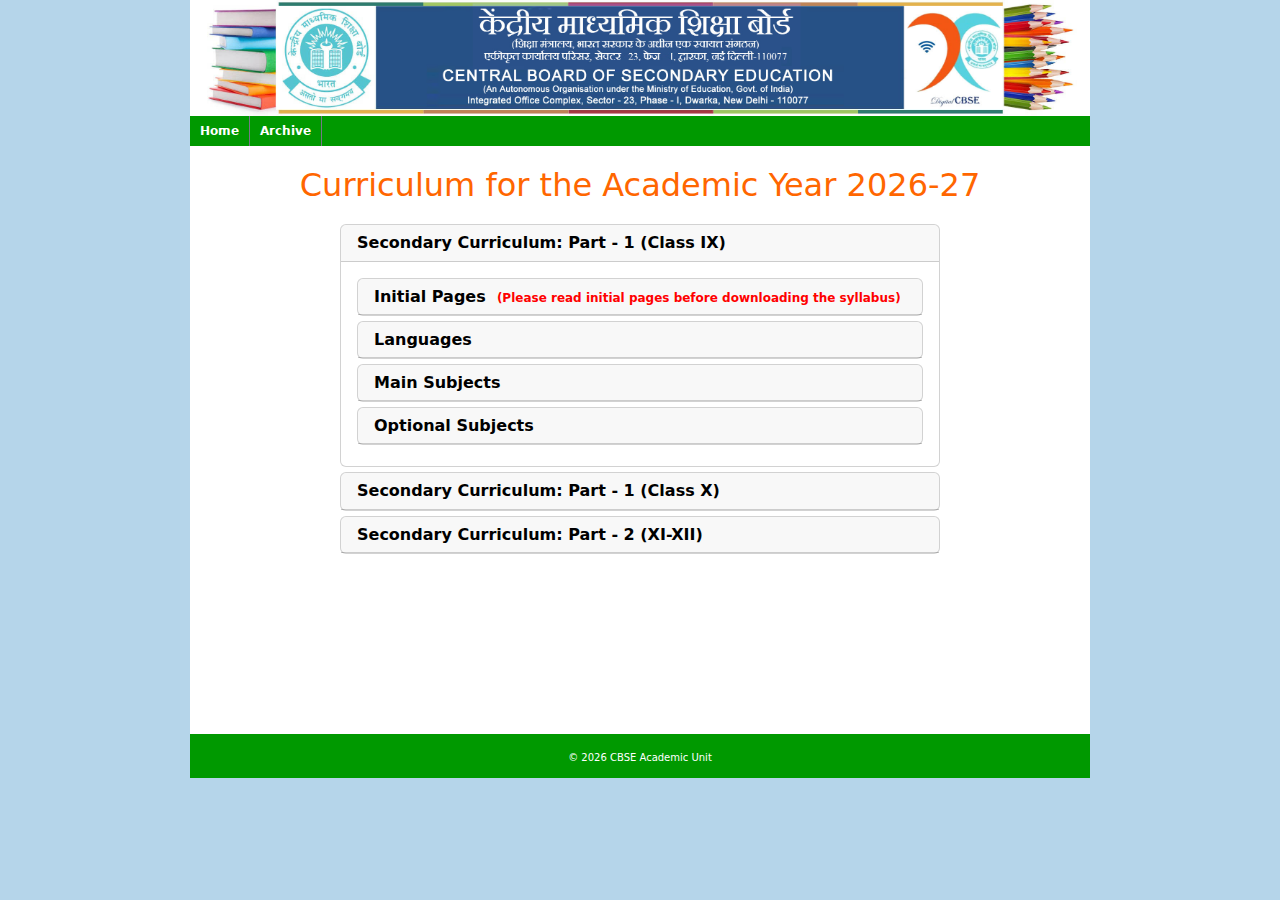
The Central Board of Secondary Education (CBSE) officially released the Class 10 Physics syllabus for the 2027 Board Exams on 19 October 2026. This syllabus is a component of the detailed Science curriculum (Subject Code 086) for the academic session 2026-27, designed to provide students with the official framework for their upcoming examinations.
The curriculum emphasizes competency-based learning and real-life applications, with the Class 10 syllabus for 2026-27 undergoing a 30% change. The 2027 board paper will feature an increased focus on competency-based and application-driven questions, constituting 50% of the paper, including case studies, source-based questions, and assertion-reasoning types.
Physics Syllabus Structure and Marks Distribution
The Physics section of the Class 10 Science syllabus carries a weightage of 25 marks out of the 80-mark theory paper. It is divided into two units, Unit III (Natural Phenomena) and Unit IV (Effects of Current), encompassing a total of four chapters. Physics questions will appear in Section C of the Science paper, comprising 10 questions.
Unit III, ‘Natural Phenomena’, includes ‘Light: Reflection and Refraction’ and ‘The Human Eye and the Colourful World’, contributing 12 marks to the Physics total. Unit IV, ‘Effects of Current’, covers ‘Electricity’ and ‘Magnetic Effects of Electric Current’, accounting for 13 marks. The Science exam duration is 3 hours, with a total of 100 marks per subject, including internal assessment.
| Unit | Unit Name | Chapters | Marks |
|---|---|---|---|
| III | Natural Phenomena | Light: Reflection and Refraction; The Human Eye and the Colourful World | 12 |
| IV | Effects of Current | Electricity; Magnetic Effects of Electric Current | 13 |
| Physics Total | 4 chapters | 25 |
Excluded Topics and Exam Pattern Changes
For the 2027 board examination, several topics have been excluded from the Physics syllabus. These include Electric Motor, Electromagnetic Induction, and Electric Generator. Also, students are not required to prove the mirror formula or the lens formula. The topic ‘colour of the sun at sunrise and sunset’ is also not included in the board exam, and information presented in boxes within the NCERT textbook will not be assessed.
The overall exam pattern for Class 10 is aligned with the National Education Policy (NEP) 2020 and the National Curriculum Framework for School Education (NCF-SE) 2023. The passing criteria for each subject mandate 33% marks separately in both the theory paper and internal assessment.
| Unit | Topic Not in Board Exam |
|---|---|
| IV | Electric Motor |
| IV | Electromagnetic Induction |
| IV | Electric Generator |
Internal Assessment and Syllabus Access
The Science curriculum, like other core subjects, includes 20 marks for internal assessment in addition to the 80-mark theory paper. This internal assessment comprises various components to evaluate students comprehensively. Physics practicals constitute 5 out of the 14 practicals prescribed in the Science curriculum.
The internal assessment structure allocates 5 marks each for Periodic Tests (best of two), Multiple Assessments (quizzes, oral tests), Portfolio (assignments, projects), and Subject Enrichment Activities (practicals, speaking activities). The official CBSE Class 10 Science syllabus PDF, which contains the Physics syllabus, can be downloaded from cbseacademic.nic.in, the official portal for the CBSE academic curriculum.
| Component | Marks |
|---|---|
| Periodic Tests (Best of two tests) | 5 |
| Multiple Assessments (Quizzes, oral tests, etc.) | 5 |
| Portfolio (Student assignments, projects) | 5 |
| Subject Enrichment Activities (Practicals, speaking activities) | 5 |
| Total | 20 |
Further reading

📰 More Education News
- Bihar PGMAC 2026 round 1 seat matrix released todayOct 19, 2026 • Nishit Kumar
- MPBSE changes exam pattern for classes 9 to 12 from 2026-27 sessionOct 19, 2026 • Nishit Kumar
- RUHS Pharmacy Admission Test counselling ends today: top clinical pharmacy colleges in Delhi NCROct 19, 2026 • Nishit Kumar
- NIPER JEE 2026: Apply for M.Pharm/Pharm.D at Govt Pharmacy College GandhinagarOct 19, 2026 • Nishit Kumar