CUET 2027: single-day exams, shorter duration likely for 15 lakh aspirants
In short
- Around 15 lakh students are expected to appear for CUET 2027.
- Candidates will likely take all chosen tests in a single day, a change from previous multi-day visits.
- Exam duration may be reduced to 40-45 minutes per subject, down from 60 minutes.
- The maximum number of subjects a student can choose might decrease from five to four.
- CUET PG 2027 may not be mandatory for postgraduate admissions where applications are below seat capacity.
The Ministry of Education, University Grants Commission (UGC), and National Testing Agency (NTA) are finalising a roadmap for significant administrative and structural changes to the Common University Entrance Test (CUET) 2027. These modifications, which include alterations to the exam pattern and dates, aim to address issues such as test fatigue, outstation travel expenses, and time consumption for an estimated 15 lakh students expected to appear for CUET 2027.
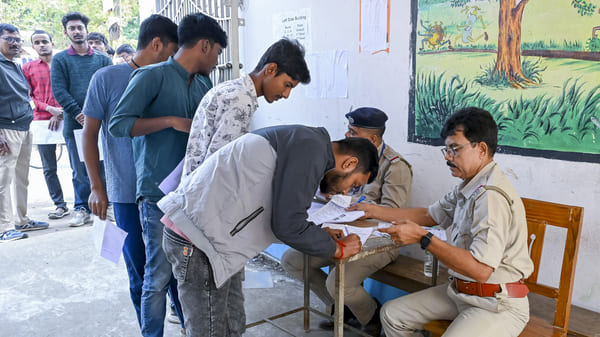
Previously, candidates often had to visit test centres two to three times over a 12 to 15-day window. The proposed changes, based on reports by Navbharat Times, seek to simplify the examination process by allowing students to complete all their chosen tests on a single day, even though the overall CUET 2027 will still be conducted over several days.
Proposed Changes to CUET UG 2027 Exam Pattern
Key changes are being considered for the CUET UG 2027 exam pattern to enhance efficiency and reduce candidate burden. The duration of each CUET exam may be reduced from 60 minutes to 40-45 minutes. Concurrently, the total number of questions in CUET UG 2027 could decrease from 50 to 35-40 per subject. In addition, the maximum number of subjects a student can select might be reduced from five to four.
Currently, CUET offers 37 subjects, comprising 13 languages, 23 domain subjects, and one general aptitude test. With the potential reduction to four subjects in a single day, the total exam hours would be approximately 160 minutes (2 hours and 40 minutes), a decrease from the 200 minutes (3 hours and 20 minutes) required for five subjects under the previous format.
Addressing University Admission Criteria
The proposed changes also aim to bring greater uniformity to university admission criteria. Currently, CUET participating universities do not have consistent admission requirements. For instance, Delhi University has strict subject combination rules for DU CUET admissions, while many state universities in Uttar Pradesh mandate the general aptitude test.
If the total subject cap is set at four, the UGC might instruct universities to adjust their admission requirements accordingly. This could include a mandate for every university to formally recognise and accept the general aptitude test, thereby standardising a core component of the admission process across institutions.
CUET PG 2027 Modifications and Previous Exam Context
For postgraduate admissions, the CUET PG exam 2027 might not be mandatory for subjects where the number of applications falls below the available seat capacity. Over 30 CUET PG subjects currently fall under this low-application category, suggesting a move towards more flexible admission policies for these specific programmes.
The CUET-UG 2024 exam, conducted between May 15 and May 24, was completed in 7 days across 16 shifts. During this cycle, 15 subjects were offered in pen-paper mode, and 48 subjects were computer-based. All candidates were allotted centres within their respective states and closer to their homes, with all subjects conducted in single shifts, which eliminated the need for score normalisation. This contrasts with the CUET-UG 2023 exam, which was delivered over 34 days and 93 shifts, and faced technical glitches, according to previous reports. Subodh Kumar Singh stated regarding the 2024 exam, “All the subjects will be in single shifts and therefore there will be no normalisation of the scores. All the candidates will have the same question paper, and thereby face the same difficulty level.” He also noted that centres were allotted “so that they need not travel long distances.”
Further reading

📰 More Education News
- SNBP Law College opens admission for Diploma in Cyber Laws 2026: fees ₹8,850, apply nowOct 7, 2026 • Nishit Kumar
- UPTET 2026 results: candidates demand review of OMR rejection, normalisationOct 7, 2026 • Nishit Kumar
- CAT 2026 application form correction closes today, make changes by 5 PMOct 7, 2026 • Nishit Kumar
- Special TET 2026: Andhra Pradesh teachers to take exam from October 11Oct 7, 2026 • Nishit Kumar