Sonam Wangchuk Educational Qualifications: The Making of an Innovative Maverick
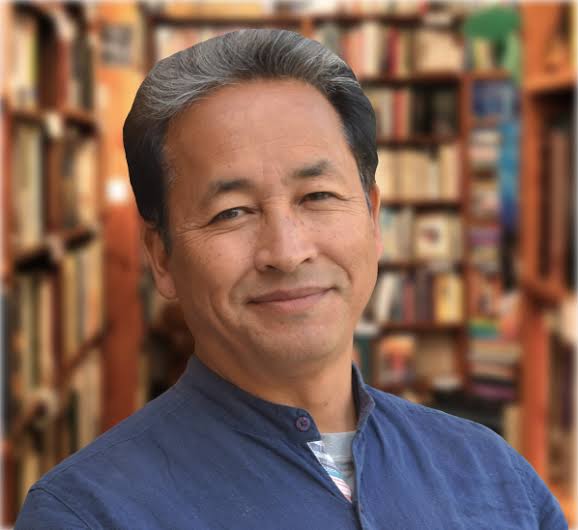
When you hear the name Sonam Wangchuk, you likely picture the real-life inspiration behind the character ‘Phunsukh Wangdu’ from the Bollywood blockbuster 3 Idiots. You might think of his revolutionary Ice Stupa artificial glaciers or his passionate climate activism under the freezing Ladakhi skies.
But beneath his layers of environmental activism and brilliant inventions lies a fascinating, unconventional academic foundation. How did a boy who didn’t start formal schooling until age nine become one of the world’s most acclaimed engineers and education reformists?
Let’s dive deep into the comprehensive Sonam Wangchuk educational qualifications and the unique academic journey that shaped his visionary mind.
The Early Years: Homeschooling and Overcoming Barriers
Sonam Wangchuk’s educational journey was far from traditional. Born in 1966 in the remote village of Uleytokpo (near Alchi) in Ladakh, his early childhood lacked access to conventional schools.
-
No School Until Age 9: Because his village lacked school facilities, Wangchuk did not enter a formal classroom until he was nine years old.
-
Mother Tongue Foundations: His mother, Tsering Wangmo, was his first teacher. She taught him basic literacy and fundamental skills in his native mother tongue, fostering a highly holistic, self-paced early learning environment.
-
Linguistic Struggles in Srinagar: In 1975, when his father was elected to the state government, Wangchuk moved to Srinagar. Facing sharp language barriers and being addressed in tongues he didn’t understand, his initial quietness was wrongly dismissed as a lack of intelligence—a phase he remembers as a dark period.
-
Escaping to Delhi: Showing early determination, a young Wangchuk escaped to Delhi on his own, pleaded his case to the principal of Vishesh Kendriya Vidyalaya, and successfully secured admission to continue his schooling.
Higher Education: Building the Engineering Foundation
Wangchuk’s higher education laid the technical groundwork for the passive solar mud buildings and ice structures he would later design.
1. B.Tech in Mechanical Engineering
-
Institution: National Institute of Technology (NIT), Srinagar — formerly known as the Regional Engineering College (REC) Srinagar.
-
Graduation Year: 1987.
-
The Story: His pursuit of engineering wasn’t easy. He faced a severe disagreement with his father regarding his choice of the engineering branch. Refusing to back down, Wangchuk financed his own engineering degree by tutoring school students who were struggling with their exams—a side hustle that sparked his lifelong obsession with reforming the education system.
2. Post-Graduate Specialization in Earthen Architecture
-
Institution: CRAterre (National School of Architecture) in Grenoble, France.
-
Duration: Two years of higher studies, completed around 2010–2011.
-
The Focus: Always looking to solve real-world issues, Wangchuk paused his ongoing work to master advanced earthen architecture. This qualification enabled him to perfect low-cost, eco-friendly mud buildings that stay a comfortable $+15^\circ\text{C}$ inside even when Ladakhi winters plunge to $-15^\circ\text{C}$ outside, using zero fossil fuels.
Summary of Educational Qualifications
| Qualification / Degree | Institution | Key Focus Area |
| Early Schooling | Homeschooled till age 9; Kendriya Vidyalaya, Delhi | Foundation & Language |
| B.Tech (1987) | NIT Srinagar (formerly REC) | Mechanical Engineering |
| Post-Masters Specialization (2010/11) | CRAterre School of Architecture, France | Earthen Architecture & Sustainability |
From “Student” to “Education Reformer”
Wangchuk’s qualifications aren’t just lines on a resume; they became tools to completely upend the traditional learning system. Experiencing firsthand how alienating standard education could be for regional students, he graduated from NIT and immediately co-founded SECMOL (Students’ Educational and Cultural Movement of Ladakh) in 1988.
The SECMOL Philosophy: Wangchuk famously established an alternative campus where the primary admission criteria was failing the standard board exams. He pivoted the pedagogy away from rote learning toward the “3 Hs”—Head, Hand, and Heart.
Later, he took higher education a step further by establishing HIAL (Himalayan Institute of Alternatives, Ladakh), an alternative mountain university designed to foster experiential learning and real-world problem-solving rather than textbook memorization.
Major Accolades & Recognition
His unique blend of mechanical engineering, earthen architecture, and alternative teaching pedagogy has earned him global acclaim, including:
-
Ramon Magsaysay Award (2018)
-
Rolex Awards for Enterprise (2016)
-
Global Award for Sustainable Architecture (2017)
Conclusion
Sonam Wangchuk’s educational qualifications prove that true learning extends far beyond classroom walls. By marrying rigorous mechanical engineering with deeply sustainable earthen architectural concepts, he created localized, revolutionary answers to modern environmental problems. He stands as a living testament that degrees are most powerful when utilized to uplift communities and protect the planet.

📰 More Education News
- RRB Section Controller answer key 2026 released: raise objections by 25 OctoberOct 16, 2026 • Nishit Kumar
- NEET UG 2026: Seth GS Medical College Round 3 cutoffs show rank expansionOct 16, 2026 • Nishit Kumar
- BSE Odisha class 10 half yearly mathematics question paper 2025-26 available for downloadOct 16, 2026 • Nishit Kumar
- WB HS Semester 3 exam 2027 concluded: results expected by November second weekOct 16, 2026 • Nishit Kumar