Delhi University revises academic publication rules, sets 120-point journal threshold
In short
- Delhi University revised its academic publication rules as of October 5, 2026.
- A 120-point threshold has been established for journals under the new guidelines.
- Guidelines for science, technology, and medical science faculties remain unchanged.
- The revised curriculum for UG and PG courses came into effect from the academic session 2019-2020.
Delhi University (DU) has revised its publication rules for academic purposes, effective October 5, 2026. The updated regulations introduce a 120-point threshold for journals, impacting academic submissions within the university.
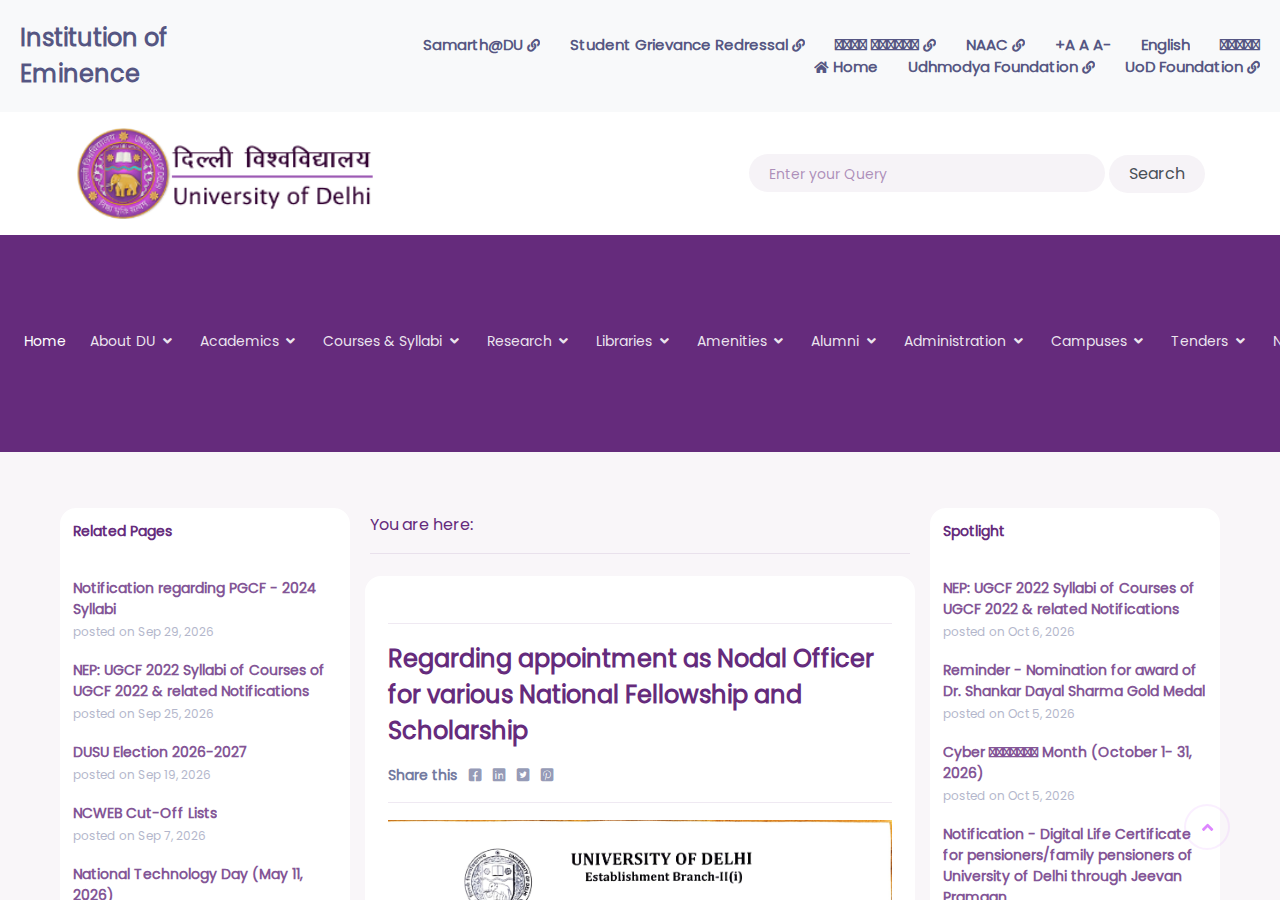
The new rules, however, do not alter the existing guidelines for faculties of science, technology, and medical science, which remain unchanged as of the specified date. This revision is part of ongoing academic reforms within the university.
Context of Academic Reforms at Delhi University
The revision of publication rules follows a series of academic reforms undertaken by Delhi University over recent years. The University Grants Commission (UGC) had previously urged Central Universities to lead in implementing academic reforms, emphasizing their long-overdue nature and the autonomy of institutions to experiment with new ideas.
Significant changes include the introduction of the semester system. The Academic Council (AC) and Executive Council (EC) decisions in June 2009 initiated the semester system for undergraduate courses for the Academic Year 2010-11. The AC further approved this system for 12 undergraduate courses on May 13, 2010, leading to circulars from the Registrar and a notification in June 2010. The Vice-Chancellor had also sent an open letter regarding the semester system for undergraduate programmes in October 2008.
Curriculum Revisions and Policy Decisions
The university has also undertaken full curriculum revisions. The process for revising courses offered by DU began on March 11, 2019, with the revised syllabus for undergraduate (UG) and postgraduate (PG) courses coming into effect from the academic session of 2019-2020. This revised curriculum is designed around outcomes related to understanding, knowledge, skills, values, and attitude, and has been released on the official university website.
In a separate development, Delhi University rejected a proposal to include the Manusmriti in its Bachelor of Laws syllabus in July 2024. Vice Chancellor Yogesh Singh stated that Manusmriti would not be taught in any form, despite the Sanskrit department having listed it as a primary text for a four-credit discipline-specific core course titled ‘Dharmashastra Studies’. The Vice Chancellor had previously noted that a committee headed by him found the Manusmriti proposal ‘not appropriate’ and rejected it, stating, “We will not teach any part of Manusmriti in any form in the University of Delhi. This direction has been issued even earlier by the vice chancellor’s office, and departments should adhere to it. There are many other texts to teach [the] Indian knowledge tradition and we should not rely on any one text.”
Other Recent University Activities
Delhi University has undertaken various initiatives beyond academic policy. The Delhi University Computer Centre (DUCC) launched a Digital Safety Awareness Campaign for Cyber Awareness Month, which ran from October 1 to October 31, 2025. This campaign aimed to promote cyber awareness among the university community.
In a separate development, GMDC Zanskar and Gargi College New Delhi formally signed a Memorandum of Understanding (MOU) on June 9, 2023. This MOU is set to last for five years and falls under the Vidya Vistar Scheme of Delhi University, indicating a collaborative effort between the institutions.
Further reading

📰 More Education News
- CG NEET UG 2026 CAP Round 3 choice filling closes October 7Oct 6, 2026 • Nishit Kumar
- BSEH affiliation schedule for 2026-27 session announced; apply by October 31Oct 6, 2026 • Nishit Kumar
- Gujarat NEET counselling 2026: ACPUGMEC begins round 3 MBBS, BDS choice filling, deadline October 10Oct 6, 2026 • Nishit Kumar
- AP Special TET hall ticket 2026 released: download before October 11 examOct 6, 2026 • Nishit Kumar