GATE 2026: Download scorecard by Dec 31 for free until June 1
In short
- IIT Guwahati released the GATE 2026 result, statistical report, raw marks, and scores of GATE toppers on March 19, 2026.
- A GATE All India Rank (AIR) under 100-300 is generally considered safe for IIT and IISc admission.
- A GATE rank under 1000 is considered good for NITs, with a rank under 200 deemed excellent for PSUs and top IITs/IISc.
- Candidates can download their GATE scorecard for free from the GOAPS portal, or for INR 500 between June 1 and December 31, 2026.
- Admissions to institutions and PSU recruitment are based on the GATE score, which is a normalized score out of 1000.
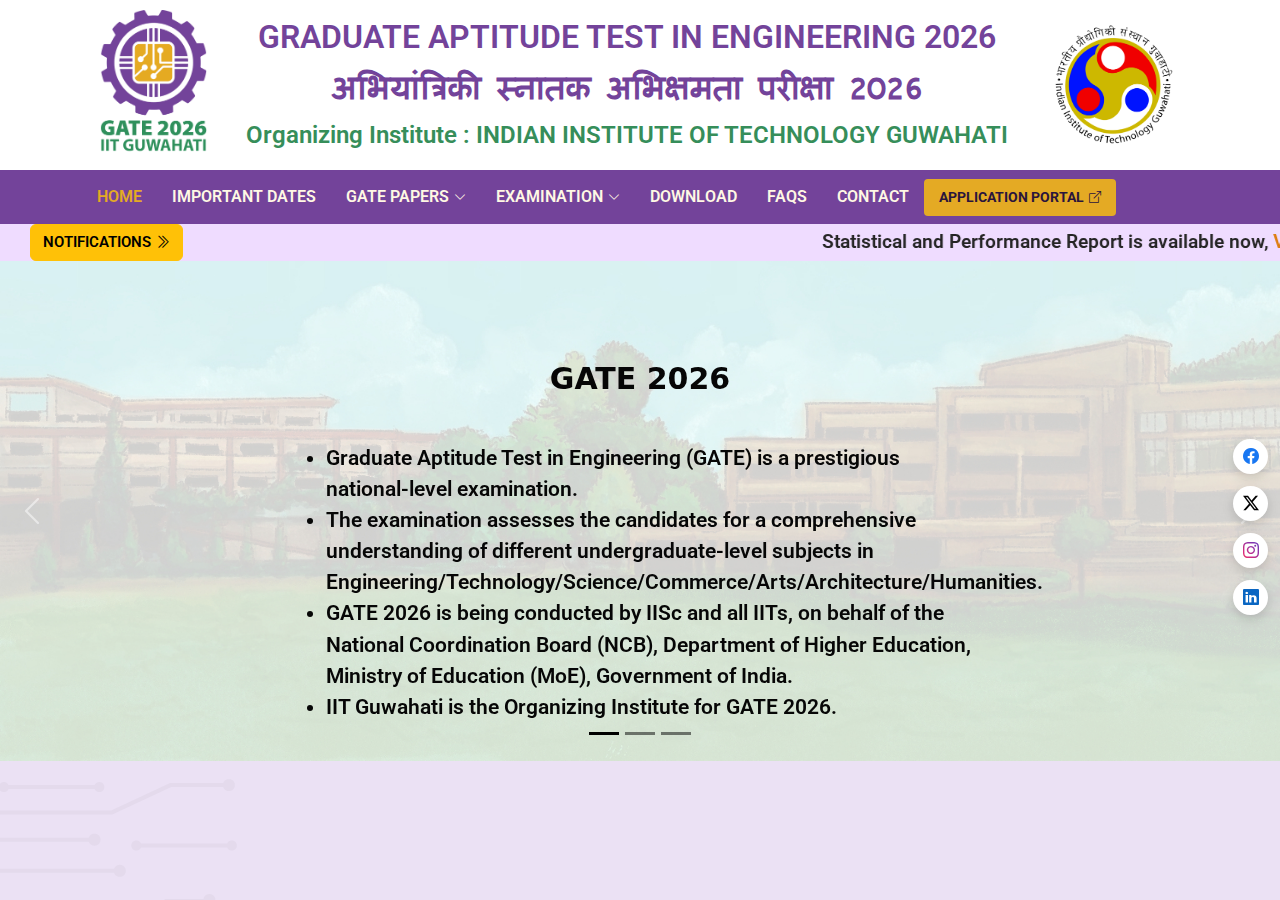
IIT Guwahati officially released the Graduate Aptitude Test in Engineering (GATE) 2026 results on March 19, 2026. The results, along with a statistical report, raw marks, and scores of GATE toppers, were made available on the official website, gate2026.iitg.ac.in. This release provides candidates with their performance analysis, which is crucial for those seeking opportunities in higher education and public sector undertaking (PSU) recruitment.
The GATE exam results are a key determinant for aspirants aiming for admission to prestigious institutions such as the Indian Institutes of Technology (IITs), National Institutes of Technology (NITs), Indian Institutes of Information Technology (IIITs), and the Indian Institute of Science (IISc). Understanding the distinction between GATE marks, score, and rank is essential for candidates to evaluate their prospects for admissions and recruitment.
Understanding GATE Marks, Score, and Rank
The GATE examination uses a multi-faceted evaluation system comprising raw marks, a normalized score, and an All India Rank (AIR). GATE marks represent the actual raw marks obtained by a candidate in the exam, out of a total of 100. The GATE score, however, is a normalized score out of 1000, calculated using a normalization formula, and is the primary metric used for admissions and PSU recruitment.
The GATE rank, or All India Rank (AIR), marks a candidate’s position among all individuals who appeared for the examination. This rank is determined by factors including GATE cutoff scores or qualifying marks, the total number of candidates who appeared, and the raw scores achieved. The General Aptitude section, contributing 15 marks, is often considered a scoring component of the exam.
Good Ranks and Scores for Admissions and PSUs
For admission to top institutions and recruitment by Public Sector Undertakings (PSUs), specific GATE ranks and scores are generally considered favorable. An All India Rank (AIR) under 100-300 is typically regarded as safe for admissions to IITs and IISc. For NITs, a GATE rank within 1000 is often considered good, with a rank under 200 being excellent and opening doors to top IITs, IISc, and PSUs.
Looking at scores, an 850+ GATE score is usually considered excellent for PSU recruitment, while a 750+ score is generally good for top IITs. A score of 650+ is commonly seen as safe for admission into NITs, IIITs, or Government Funded Technical Institutes (GFTIs). Even a GATE score of 600 can lead to admissions in some of the best NITs and newer IITs, and a score of 450 can secure NIT admissions for many branches and categories.
| GATE Score Range | Expected Rank Range | Colleges You Can Expect |
|---|---|---|
| 850 – 1000 | 1 – 100 | IIT Bombay, IIT Delhi |
| 750 – 849 | 101 – 300 | IIT Kharagpur, IIT Kanpur |
| 650 – 749 | 301 – 800 | IIT Roorkee, IIT Guwahati |
| 550 – 649 | 801 – 1500 | NIT Trichy, NIT Surathkal |
| 450 – 549 | 1501 – 3000 | IIIT Hyderabad, NIT Calicut |
| 350 – 449 | 3001 – 5000 | Newer NITs, state-level colleges |
| Below 350 | 5000+ | Private or state universities |
| GATE Rank Range | Institutes (Expected) | Admission Probability |
|---|---|---|
| 1 – 100 | IIT Bombay, IIT Delhi, IISC | Very High |
| 101 – 500 | IIT Kharagpur, Kanpur, Madras | High |
| 501 – 1000 | IIT Roorkee, IIT Guwahati, NITIE | Medium to High |
| 1001 – 2000 | NIT Trichy, Warangal, Surathkal | Moderate |
| 2001 – 4000 | Newer IITs, IIITs, state colleges | Possible |
| 4001+ | State Univ, self-financed colleges | Low to Moderate |
PSU Recruitment and International Opportunities
Competition for recruitment in most PSUs is significant, with many accepting candidates primarily within the top 200 ranks. A rank below 150 is generally considered safe for prominent PSUs such as BHEL, IOCL, ONGC, and NTPC. However, some PSUs may consider candidates with a rank of 500 if they possess a strong academic profile, often after further tests and interviews.
Beyond India, GATE scores are also recognized by certain international universities for postgraduate courses. Institutions in Singapore, such as NUS and NTU, and in Germany, including RWTH Aachen and TU Munich, accept GATE scores. These programs typically require a score exceeding 600-650, besides language proficiency.
Accessing GATE Scorecards and Cutoff Information
Candidates can download their GATE scorecard for free from the GOAPS portal. For those who need to download their scorecard between June 1 and December 31, 2026, a fee of INR 500 will be applicable. The GATE scorecard includes the GATE score, All India Rank (AIR), and qualifying marks, which are crucial for subsequent application processes.
The GATE 2025 cutoff marks for various papers, as released by IIT Guwahati, provide a reference for candidates to understand the minimum qualifying scores across different disciplines and categories. These cutoffs vary significantly by paper code and test paper, reflecting the differing levels of competition and difficulty.
| Paper Code | Test Paper | Cut-off (GEN) | Cut-off (OBC-NCL/EWS) | Cut-off (SC/ST/PwD) |
|---|---|---|---|---|
| AE | Aerospace Engineering | 28.9 | 26 | 19.2 |
| AG | Agricultural Engineering | 25 | 22.5 | 16.6 |
| AR | Architecture and Planning | 40 | 36 | 26.6 |
| BM | Biomedical Engineering | 29.2 | 26.2 | 19.4 |
| BT | Biotechnology | 28 | 25.2 | 18.6 |
| CE | Civil Engineering | 29.2 | 26.2 | 19.4 |
| CH | Chemical Engineering | 27.7 | 24.9 | 18.4 |
| CS | Computer Science and Information Technology | 29.2 | 26.2 | 19.4 |
| CY | Chemistry | 25 | 22.5 | 16.6 |
| DA | Data Science and Artificial Intelligence | 29 | 26.1 | 19.3 |
| EC | Electronics and Communication Engineering | 25 | 22.5 | 16.6 |
| EE | Electrical Engineering | 25 | 22.5 | 16.6 |
| ES | Environmental Science and Engineering | 26.1 | 23.4 | 17.4 |
| EY | Ecology and Evolution | 39.5 | 35.5 | 26.3 |
| GE | Geomatics Engineering | 25.7 | 23.1 | 17.1 |
| GG1 | Geology and Geophysics (Geology) | 38.4 | 34.5 | 25.5 |
| GG2 | Geology and Geophysics (Geophysics) | 40 | 36 | 26.6 |
| IN | Instrumentation Engineering | 25.6 | 23 | 17 |
| MA | Mathematics | 25 | 22.5 | 16.6 |
| ME | Mechanical Engineering | 35.8 | 32.2 | 23.8 |
| MN | Mining Engineering | 30.6 | 27.5 | 20.4 |
| MT | Metallurgical Engineering | 40 | 36 | 26.6 |
| NM | Naval Architecture and Marine Engineering | 25.1 | 22.5 | 16.7 |
| PE | Petroleum Engineering | 31.1 | 27.9 | 20.7 |
| PH | Physics | 26.8 | 24.1 | 17.8 |
| PI | Production and Industrial Engineering | 35.6 | 32 | 23.7 |
| ST | Statistics | 30.2 | 27.1 | 20.1 |
| TF | Textile Engineering and Fibre Science | 34.7 | 31.2 | 23.1 |
| XE | Engineering Sciences | 35.4 | 31.8 | 23.5 |
| XH-C1 | Humanities and Social Sciences (Economics) | 40 | 36 | 26.6 |
| XH-C2 | Humanities and Social Sciences (English) | 40 | 36 | 26.6 |
| XH-C3 | Humanities and Social Sciences (Linguistics) | 40 | 36 | 26.6 |
Further reading

📰 More Education News
- Apply for IIT B.Cybersecurity 2026-27 admissions nowSep 30, 2026 • Nishit Kumar
- NEET SS Counselling 2025: Register by Sep 29, fill choices by Sep 30Sep 30, 2026 • Nishit Kumar
- JAC class 9th and 11th special exam 2026 result out: download provisional marksheetSep 30, 2026 • Nishit Kumar
- HPSC Food Safety Officer recruitment 2026: apply for 45 posts by 19 OctoberSep 30, 2026 • Nishit Kumar