NEET UG ranks as world’s 5th largest exam with 2.5 million candidates: SBI report
In short
- SBI Research's report, released on October 1, 2026, ranks NEET UG as the world's 5th largest examination with approximately 2.5 million candidates.
- China's Gaokao is the largest exam globally with 12.9 million candidates, followed by Brazil's ENEM with 4.8 million.
- The report, titled 'The State of Higher Education in India since 2014', examines lessons for India's examination system.
- The National Testing Agency (NTA), which conducted NEET UG 2026, is recommended for a stronger statutory framework via an NTA Act of Parliament.
- Union Education Minister Dharmendra Pradhan resigned on July 25 following demonstrations over the NEET-UG 2026 paper leak.
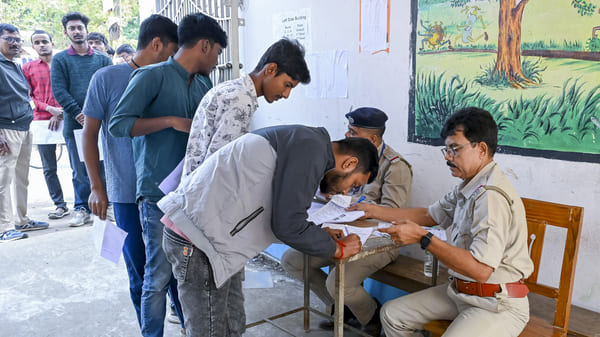
India’s National Eligibility cum Entrance Test (Undergraduate), or NEET UG, has been ranked as the world’s fifth largest examination, attracting approximately 2.5 million (25 lakh) candidates. This finding comes from an SBI Research report published on October 1, 2026, which also examined potential lessons for India’s examination system amidst recent scrutiny.
The report, titled ‘The State of Higher Education in India since 2014: A decade of growth with empowerment of women and marginalised sections’, places NEET UG behind China’s Gaokao, Brazil’s ENEM, China’s Guokao civil services exam, and China’s national master’s entrance exam as for candidate volume. The comparison of examination systems follows renewed attention on India’s testing framework, particularly after the NEET-UG 2026 paper leak and subsequent protests.
Global and Indian Examination Landscape
The SBI Research report provides a comparative analysis of major examinations worldwide, highlighting the scale of India’s NEET UG. China’s Gaokao leads as the world’s largest examination, registering approximately 12.9 million (1.29 crore) candidates in 2026. Brazil’s ENEM follows as the second largest with about 4.8 million (48 lakh) candidates. China’s Guokao civil services exam and its national master’s entrance exam rank third and fourth, respectively, with around 3.7 million (37 lakh) and 3.4 million (34 lakh) candidates.
Other significant global examinations mentioned in the report include Turkiye’s YKS with around 2.4 million candidates, Nigeria’s UTME with about 2.2 million candidates, and the SAT with approximately 2.0 million candidates globally. Within India, the Union Public Service Commission (UPSC) Civil Services Exam attracts around 1.2 million candidates, JEE Main has about 1.0 million candidates, and UGC-NET sees approximately 0.8 million candidates.
| Examination | Country | Applications (million) |
|---|---|---|
| Gaokao | China | 12.9 |
| ENEM | Brazil | 4.8 |
| Central Civil-Service Examination (Guokao) | China | 3.7 |
| National Master’s Entrance Examination | China | 3.4 |
| NEET UG | India | ~2.5 |
| YKS | Türkiye | 2.4 |
| UTME | Nigeria | 2.2 |
| SAT | US / International | 2.0 |
| SSC and equivalent examinations | Bangladesh | 1.8 |
| ACT | US | 1.4 |
| UPSC CSE | India | ~1.2 |
| HSC and equivalent examinations | Bangladesh | 1.2 |
| JEE Main | India | ~1.0 |
| UGC NET | India | ~0.8 |
Recommendations for India’s Examination System
The SBI Research report has put forth several recommendations for strengthening India’s examination system, particularly in light of recent controversies. The National Testing Agency (NTA), which conducted NEET UG 2026, is currently a society registered under the Societies Registration Act, 1860. By July 2024, the NTA had conducted over 240 exams involving more than 5.4 crore candidates. The report highlights that 171 of 194 disclosed NTA personnel were contractual or outsourced employees, constituting approximately 88% of the workforce.
To address these structural aspects, SBI Research has recommended a stronger statutory framework for the NTA through an NTA Act of Parliament. Further recommendations for the NTA include establishing an expert board, a permanent professional workforce, independent review mechanisms, a candidate charter, and greater public accountability. These suggestions aim to enhance the agency’s operational integrity and public trust.
Lessons from Global Examination Practices
The report suggests that India could adapt lessons from large examination systems like China’s Gaokao to improve its own processes. The Gaokao, for instance, in 2026 was conducted across 7,981 centres with 3.48 lakh exam rooms and 21,000 reserve rooms. Its security measures include secure printing facilities, 24-hour surveillance, armoured and GPS-tracked vehicles for transporting question papers, police escorts, and monitored, steel-reinforced storage facilities. Candidates undergo identity verification and checks for prohibited items, and exam centres are monitored through video surveillance. Authorities also coordinate arrangements for traffic, noise control, food, health, and weather contingencies.
SBI Research specifically recommended focusing on preventing leaks, ensuring clearer accountability, and establishing tough contingency mechanisms for India’s examination system. This includes clearly defined responsibility for question-paper custody, formal procedures for postponements and re-examinations, relying on reserve question papers, and the provision of alternative examination centres. The report also recommends measures to protect candidates affected by disruptions during the subsequent admission process.
Addressing Recent Controversies and Future Steps
The recommendations from SBI Research come when you look at the NEET UG 2026 examination, which was conducted by the NTA on May 3, but next cancelled due to allegations of a question-paper leak. The Central Bureau of Investigation (CBI) registered a case and identified the source of the Chemistry paper leak for NEET UG 2026. The controversy led to widespread student protests and culminated in the resignation of Union Education Minister Dharmendra Pradhan on July 25.
For evaluation, the report suggested stronger anonymous double-marking and automated audits of scoring systems. It also calls for transparent reporting of examination incidents, time-bound appeal mechanisms, and monitoring of disruptions, corrections, and associated costs. Looking ahead, the Ministry of Education is developing a national examination-grade computer-based testing (CBT) infrastructure strategy to ensure a easy transition of medical entrance from pen-and-paper to online mode, with active consideration based on a multi-model sourcing architecture.
Further reading

📰 More Education News
- Eight surrendered Maoists clear Class 10 open school exam in ChhattisgarhOct 2, 2026 • Nishit Kumar
- Delhi University promotion criteria raised to 63% for UG studentsOct 2, 2026 • Nishit Kumar
- AIIMS NORCET 11 Mains 2026 memory-based questions and answers releasedOct 2, 2026 • Nishit Kumar
- MDI Gurgaon PGDM 2027-29 admissions open: apply by 28 NovemberOct 1, 2026 • Nishit Kumar